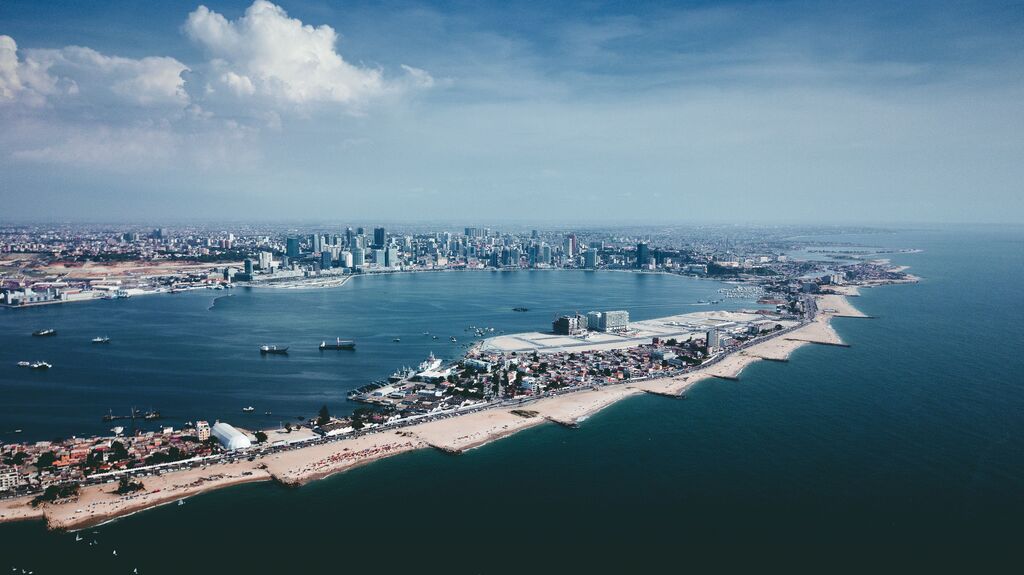
Angola · Heritage & History · Kongo, Ndongo, Luanda
Angola's heritage: five centuries on the Atlantic
The name Angola comes from ngola, the title of the kings of Ndongo. Long before the
Portuguese arrived, this region had kingdoms with capitals, courts and diplomacy.
What followed — the fortress at Luanda, the slave trade to Brazil, the war for
independence and the long war after it — is a history that tourism brochures tend to skip.
We don't.
Before 1480sThe Kingdom of Kongo rules the north from Mbanza Kongo; the Ndongo kingdom lies further south and east.
1482–1483Diogo Cão reaches the mouth of the Congo River — in the same years the Portuguese build São Jorge da Mina at Elmina on the Gold Coast.
1526King Afonso I of Kongo writes to the king of Portugal complaining that Portuguese traders are taking his people.
1576Paulo Dias de Novais founds Luanda; the Fortaleza de São Miguel follows.
1620s–1660sNjinga Mbande, queen of Ndongo and Matamba, resists Portuguese expansion for decades.
1641–1648The Dutch occupy Luanda, four years after taking Elmina; a fleet from Brazil retakes the city for Portugal.
4 February 1961Attacks on prisons in Luanda mark the start of the armed struggle for independence.
11 November 1975Independence from Portugal; Agostinho Neto becomes the first president.
1975–2002Civil war, ending with a ceasefire in 2002.
2017Mbanza Kongo becomes a UNESCO World Heritage Site.
The Kingdom of Kongo and Mbanza Kongo
When the Portuguese arrived, the Kingdom of Kongo was one of the largest states on the
Atlantic coast of Africa, ruled from Mbanza Kongo in today's far north of Angola. Its kings
exchanged ambassadors with Lisbon and Rome, and several converted to Christianity.
The best known, Afonso I, wrote to the king of Portugal in 1526 complaining that Portuguese
traders were seizing his people — including nobles and his own relatives — and asking for
the trade to stop. It did not. His letters are among the earliest written African protests
against the Atlantic slave trade.
UNESCO World Heritage: Mbanza Kongo, inscribed in 2017 as the vestiges of the capital of the former Kingdom of Kongo.
What you see: the ruins of the Kulumbimbi church, said to be among the oldest churches south of the Sahara, the royal burial grounds and the site of the old court.
Getting there: Mbanza Kongo lies in Zaire Province, a long journey north of Luanda. Go with a local operator.
Luanda, 1576: the fortress on the bay
Paulo Dias de Novais founded São Paulo de Luanda in 1576, and the Fortaleza de São Miguel
rose on the hill above the bay. For centuries it was the centre of Portuguese power on this
coast — and of the trade in people that ran through it.
Today the fortress is a museum of military history, with azulejo tile panels telling the
Portuguese version of the conquest, and colonial statues removed from Luanda's squares after
independence. It is worth visiting for exactly that contrast: one building, two very
different stories.
Also in Luanda: the Church of Nossa Senhora da Nazaré from the seventeenth
century, the old Baixa with its colonial buildings, and the Iron Palace — often credited to
Gustave Eiffel's workshop, a claim no one has proven.
Queen Njinga
Njinga Mbande, queen of Ndongo and later of Matamba, spent four decades in the seventeenth
century resisting Portuguese expansion — through war, alliances, and shrewd diplomacy. She
negotiated with the Portuguese governor in Luanda, allied with the Dutch during their
occupation of the city, and ruled until her death in the 1660s.
In Angola she is a national heroine; her statue stands in Luanda. Many of the stories told
about her are legend rather than record, but the outline of her life — a ruler who forced a
colonial power to negotiate with her for forty years — is well documented.
The slave trade: the Brazil route
More people were taken from West Central Africa — the coast of today's Angola and the Congo
region — than from any other part of Africa during the Atlantic slave trade. Most were
shipped from Luanda and Benguela to Brazil. Ghana's castles at Elmina and Cape Coast are
better known abroad; the numbers from this coast were far larger.
The National Slavery Museum stands on the Morro da Cruz south of Luanda,
beside a seventeenth-century chapel where captives were baptised before being put on ships.
It is small and simple. That is part of its force: nothing here is staged.
Where: Morro da Cruz, on the coast south of Luanda — combine it with Miradouro da Lua.
Allow: one to two hours, plus travel through Luanda's traffic.
Going: with a guide, the history becomes far clearer; signage is mostly in Portuguese.
Independence and the long war
The armed struggle against Portuguese rule began in 1961, with the uprising of cotton
workers in the Baixa de Cassanje in Malanje and the attacks on Luanda's prisons on
4 February. Three movements fought for independence, and after the 1974 revolution in
Lisbon Portugal withdrew. On 11 November 1975 Agostinho Neto proclaimed independence in
Luanda.
Independence was followed by a civil war that lasted, with pauses, until 2002 and drew in
foreign powers on both sides. Its traces — landmines, destroyed bridges, a generation that
grew up in war — still shape the country. The tall Agostinho Neto Memorial in Luanda is the
place where the state tells its own version of this history.
This site gives practical travel and heritage information. For the political history of
Angola's independence, see African Independence.
Museums and heritage sites to visit
Fortress Luanda
Fortaleza de São Miguel
The 1576 fortress above the bay, today a museum of military history with tile panels and colonial statues.
Museum South of Luanda
National Slavery Museum
On the Morro da Cruz, beside the chapel where captives were baptised before shipment to Brazil.
Museum Luanda
National Museum of Anthropology
Masks, instruments and objects of daily life from Angola's many peoples.
Memorial Luanda
Agostinho Neto Memorial
The monument and mausoleum of Angola's first president, dominating the skyline south of the centre.
UNESCO Zaire Province
Mbanza Kongo
Capital of the old Kingdom of Kongo, with the ruins of the Kulumbimbi church.
The black rocks of the Ndongo kingdom, tied in local tradition to Queen Njinga.
Opening hours and entrance fees change and are not always published. Check locally, or go with a guide who knows the current arrangements.
The same story, told from Ghana
The Portuguese built Elmina on the Gold Coast in the same years they reached the Congo. The
Dutch took Elmina in 1637 and Luanda in 1641. And in the nineteenth century, Afro-Brazilian
returnees — the Tabom — came back from Brazil to Accra, carrying the same Portuguese-speaking
Atlantic world with them. Our Ghana sites tell that side of the story:
The British slave castle on the Gold Coast, and its museum.
Historical tours in Luanda
Luanda's history is best seen with someone who can read it for you — the fortress, the old
Baixa, the churches and the slavery museum on the coast. These are bookable city and history
tours. Entrance fees are included in the tour price. Tips for guides and drivers are not
included, but they are welcome.
Tour links are affiliate links: if you book, we may earn a small commission at no extra cost to you.